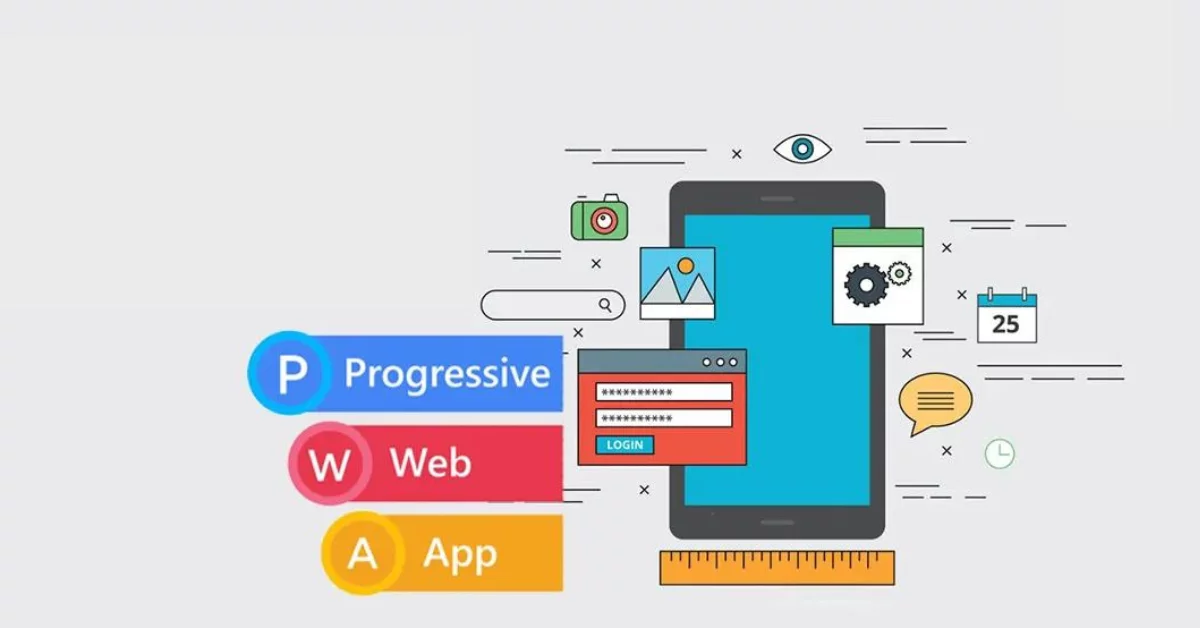
Progressive web apps (PWAs) match the strengths of web and mobile apps by leveraging cutting-edge technologies. Recent browser advancements and the availability of service workers, as well as the Cache and Push APIs, have facilitated web admins to allow users to access web services on their home screen, start receiving real-time notifications, and even work offline.
When compared to a native app in the respective app stores, it benefits from a much larger ecological system, plugins, community, and even the apparent ease of deploying and preserving a website.
Those all you who have developed for multi-platform will admire the fact that a site can be assembled in less time, and that an API doesn’t have to be preserved with interoperability (all patrons will run the same edition of your website’s code, as opposed to the version polarisation of native apps), and that the app is generally simpler to implement and maintain.
Why are Progressive Web Apps used?
According to the research, an app ends up losing 20% of its clients with every phase between the user’s first interaction with the app and the user’s starting to use the app. A user must first locate the software in a play store, download it, install it, and then launch it. When a user discovers your PWAs they will be able to use them right away, skipping the superfluous downloading and setup stages. Whenever the customer authenticates the app, he or she will be compelled to install it and revamp it to a total version.
Moreover, a native app isn’t bad. Push notifications increase retention nearly three times more than non-push notifications, and a user is substantially more likely to revive a software platform than a website. Furthermore, because certain resources tend to stay on the device, a well-designed smartphone app consumes fewer data and is much faster.
A PWA leverages the properties of a mobile app, leading to improved user productivity without the ailments of maintaining an app.
Progressive Web Apps (PWA) are created and reinforced with advanced APIs to provide expertise, durability, and competence” while attaining anyone, anywhere, and on any gadget with a specific operating system. Use the core and advantageous checklists and top tips to help you build the best possible experience.
A Progressive Web App’s Characteristics
Before we begin, it is essential to understand that website builders have the essential specifications:
- Progressive: A progressive web app, by definition, must function properly on any device and gradually improve, getting the benefit of any available features on the user’s operating system platform.
- Cacheable: Since a PWA is a site, it must be SEO-friendly. This is a massive benefit over native applications, that continue to lag behind websites in terms of searchability.
- Linkable: Another feature rooted in sites on the internet, a well-designed web application must use the URI to demonstrate the application’s current state. Whenever the user bookmark folders or shares the app’s URL, the web app will be able to retain or redeploy its state.
- Responsive: The UI of a progressive mobile application must be responsive to the device’s form factor and a larger screen.
- Widget: A PWA should have the appearance of a native app and be formed using the software shell model, with a few page refreshes.
- Connectivity-independent: It should function in areas with limited interconnection or offline (our favorite characteristic).
- Re-engageable: Mobile browser users tend to utilize their plugins, and web applications aim to accomplish the task through features like push notifications.
- Installable: A progressive version of the application can be equipped on the device’s home screen for easy access.
- Fresh: When new stuff is posted and the user is hooked up to The internet, the app should make that data accessible.
- Safe: Because a liberal web app provides a more personalized user experience and all network queries can be intercepted via hospitality workers, the tool must be offered to host over HTTPS to avoid man-in-the-middle attacks.
Checklist of Essential Progressive Web Apps
The Progressive Modern Web Checklist explains what helps to make software installable and playable by all account holders, regardless of device type.
- A big lead, rapid finish: Even though strong sites participate and build relationships better than low-performing ones, performance is an indicator of the effectiveness of any web world. Sites should prioritise user-centric system performance.
- It works in all browsers: Users can access your new website before it is installed using any browser they prefer.
- Any screen size is supported: Your PWA can be accessed by users on any screen size, and all substance is accessible at any screen resolution.
- Provides a personalized offline page: When viewers are temporarily unavailable, managing to keep them in your PWA rather than reverting to the default browsing offline insights into a much smoother integration.
- Is it installable? Consumers who mount or add google services to their devices are more likely to interact with those apps.
Checklist for the Best Progressive Web App
More than just the foundational guide is meant to generate a top-notch creative Software Tool, one that thinks like the best android apps. The ideal Democratic Web App checklist strives to make the PWA feel like it’s a core component of the device it’s attempting to run on while leveraging what helps to make the web powerful.
- Offline experience is provided: For which internet access isn’t strictly necessary, your app will function the very same offline as it will online.
- Is completely accessible: All user interactions meet the WCAG 2.0 accessibility standards.
- Use a search engine to find it: Your PWA is easily found through a search.
- It accepts any type of input: Your PWA can be used with a mouse, buttons, trackpad, or grasp.
- Contextualizes permission requests: When getting approval to use influential APIs, offer additional context and only authorization only when API is required.
- Best practices for a healthy code are followed: Maintaining the health of your codebase makes things simpler to meet your objectives and deliver major updates.
Examples of PWAs
Performance is pivotal to the survival and revenue growth of any online business. As a result, online sites across industries are implementing a new standard known as Progressive Web Apps (PWAs) to boost performance.
The best way to understand how a Modern Web App differs from traditional responsive websites is to look at some excellent examples of PWAs.
Here’s a collection of spectacular Progressive Web App resources from multiple industries, so you can get a taste of the new online technology for yourself.
- Starbucks
Starbucks established a PWA of the eCommerce platform on the browser, which offers up a lot in common to their current native platform, to provide a usable, user-friendly ordering system to each of their buyers. In other words, Starbucks PWA’s order to manage in digital form allows customers to search the menu, customize their order information, and add items to their shopping trolleys without constant internet access. They can visualize site pricing and place beverages once they’re available on the internet.
The PWA is 99.84 percent relatively smaller than Starbucks’ emerging iOS app, making it a user favorite. They have more than twice the number of internet users who purchase goods on a daily basis, with windows users now purchasing at similar rates as phone users.
- BMW
BMW, as an innovative brand in the automobile industry, demonstrates that they are not afraid of new technologies, whether it be with their car models or their web application. The franchise sought to provide a value and content strategy that reflected its values to maximize customer experience. The new BMW PWA offers customers a ‘geez’ expertise.
The elevated pictures and videos are often the first thing anyone observes, as well as the web load distribution almost instantaneously with so many of these functionalities. Witnessing the opening of the PWA, their investigation indicates additional impressive figures: When compared to the old premises, there was a 4X influx of people pressing from the main page to a BMW store”, a 50% increase in smartphone subscribers, and a 49% increase in site inspections.
- 2048 Game
In 2014, the cryptic crossword game 2048 was launched as a free download for Android and iOS. It quickly went viral, gaining over million monthly active users in much less than a week.
The game is straightforward as well as thrilling. Its goal, outlined as “Candy Crush for mental arithmetic,” is to merge components to the same figures to eventually add up to 2048. An actual PWA edition is now available at 2048game.com, allowing players to access the game through any browser window. With seamless transitions and appropriate implementation, the PWA is difficult to distinguish from its native app contemporaries. Furthermore, the 2048 Software application can be made solely offline.
- MakeMyTrip
The MakeMyTrip.com website is an excellent demonstration of a PWA. The top tourism company in India receives approximately eight million visitors per month, with traffic information accounting for two-thirds of total traffic. As cellphones became one of the most popular booking channels among MakeMyTrip users, they created a PWA that resulted in a fast, dependable, and streamlined dedicated app.
By cutting page-load times by 38%, the new PWA interaction has quadrupled its exchange rate. MakeMyTrip grew customer sessions by 160 percent and reduced dwell time by 20 percent when compared to their preceding mobile site.
Pinterest built its smart wireless browsing experience as a PWA from the scratch, with an eye toward global expansion. Due to poor portable performance, the social media platform discovered that just 1% of their phone users transform into sign-ups, usernames, passwords, or platform installs.
- Spotify
Spotify, like several other large brands, saw a prompt and effective incentive to start growing a PWA variant of their platform due to a certain dispute between Spotify and Apple regarding Apple’s 30 percent play store contract. The PWA edition is considerably faster than its vernacular counterpart, with its own distinctive and versatile UI that keeps changing its history as the user unfolds through the app. Users are indeed compelled to add Spotify PWA to their homepage, just like many other PWAs, seeking to make Spotify PWA more approachable and comparable to its other versions.