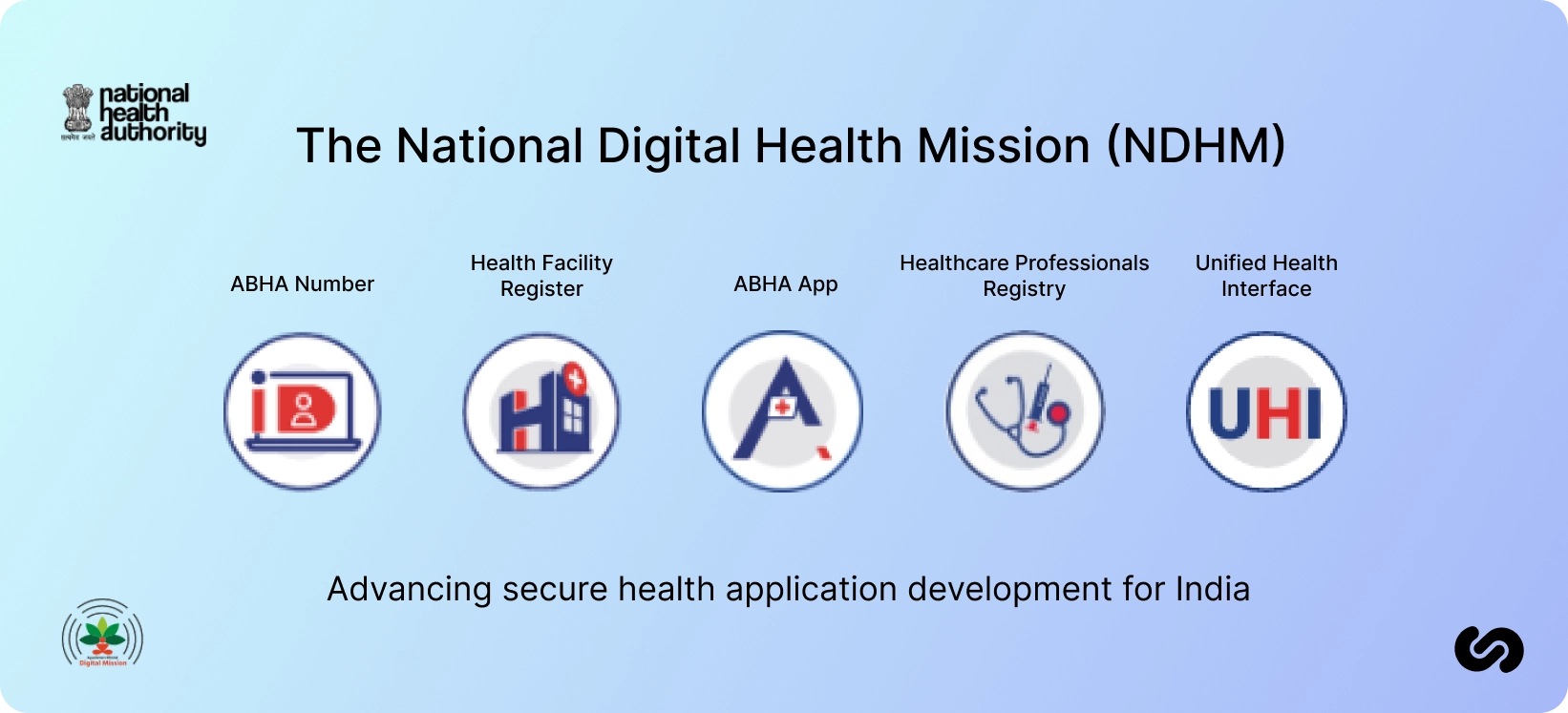
National Digital Health Mission: Pioneering Secure Application Development for a Healthy Future
Introduction
In an age of rapid technological advancements, the National Digital Health Mission (NDHM) emerges as a groundbreaking initiative that seeks to revolutionise healthcare services in India. With a focus on enhancing accessibility, affordability, and quality of healthcare through the power of digital technology, NDHM aims to empower citizens, healthcare providers, and policymakers alike. One crucial aspect of NDHM's success lies in ensuring the secure development of applications that facilitate seamless interactions within the healthcare ecosystem. In this blog post, we delve into the purpose of NDHM, the guidelines for secure application coding, mobile application security, and the key design principles that need to be adhered to for a successful and secure implementation.
1. About National Digital Health Mission (NDHM)
The National Digital Health Mission is an ambitious flagship program by the Government of India, designed to transform the healthcare landscape by leveraging digital technologies. The mission aspires to create a digital ecosystem that connects patients, healthcare providers, and policymakers through secure and interoperable health data systems. The primary objectives of NDHM include:
a) Health ID: Providing a unique health identification number to every Indian citizen, facilitating seamless access to personal health records.
b) Health Records: Creating a digital repository of health records for each individual to ensure continuity of care, irrespective of the healthcare provider.
c) Telemedicine: Enhancing access to healthcare services through telemedicine consultations, reducing the burden on physical infrastructure.
d) Personal Health Records (PHR): Empowering individuals to manage and control their health information through the PHR framework.
2. Purpose of NDHM
The National Digital Health Mission envisions a future where healthcare services are digitised, decentralised, and democratised. By promoting secure application development, NDHM aims to achieve the following purposes:
a) Enhanced Data Security: NDHM intends to protect the sensitive health information of individuals from unauthorised access and potential breaches.
b) Interoperability: Encouraging the development of applications that adhere to interoperable standards, ensuring seamless exchange of health data across the healthcare ecosystem.
c) Improved Access to Healthcare: By fostering the development of secure and user-friendly applications, NDHM strives to increase accessibility to healthcare services, especially in remote areas.
d) Streamlined Healthcare Delivery: With secure applications, NDHM aims to facilitate efficient and cost-effective healthcare delivery, reducing the burden on healthcare facilities.
3. Application Secure Coding Guidelines
Developing secure applications for NDHM requires strict adherence to coding best practices and industry standards. Here are some essential guidelines for application secure coding:
a) Input Validation: Implement strict input validation mechanisms to prevent common vulnerabilities like SQL injection, cross-site scripting (XSS), and other injection attacks.
b) Authentication and Authorization: Enforce robust authentication mechanisms and access controls to ensure that only authorised users can access sensitive health data.
c) Data Encryption: Employ strong encryption algorithms to protect data at rest and in transit, safeguarding it from unauthorised access during storage and transmission.
d) Error Handling: Implement graceful error handling to prevent the exposure of sensitive information to potential attackers.
e) Regular Code Reviews: Conduct regular code reviews and security assessments to identify and address potential vulnerabilities early in the development process.
f) Patch Management: Stay vigilant about security updates and promptly apply patches to mitigate emerging threats.
g) Compliance with Standards: Adhere to industry standards and guidelines such as HIPAA, GDPR, and OWASP to ensure the highest level of security.
4. Mobile Application Security
Mobile applications play a crucial role in NDHM's vision of democratising healthcare services. However, the mobile environment presents unique security challenges that must be addressed:
a) Secure APIs: Develop secure Application Programming Interfaces (APIs) to facilitate secure communication between mobile applications and backend systems.
b) Data Storage: Ensure that sensitive data stored on mobile devices is encrypted and protected from unauthorised access or extraction.
c) Secure Communication: Implement secure communication protocols such as HTTPS to safeguard data transmission between the mobile app and backend servers.
d) Two-Factor Authentication (2FA): Integrate 2FA to add an extra layer of security, reducing the risk of unauthorised access to sensitive health information.
e) Mobile Device Management (MDM): Encourage the use of MDM solutions to enable remote wiping of devices in case of theft or loss, preventing data breaches.
5. Key Design Guidelines to Adhere
Designing applications that align with NDHM's objectives requires careful consideration of key design principles:
a) User-Centric Approach: Prioritise user experience and design intuitive interfaces that cater to users of all age groups and technology literacy levels.
b) Scalability: Design applications that can scale to accommodate a growing user base without compromising performance or security.
c) Modular Architecture: Adopt a modular design approach to promote reusability, maintainability, and ease of integration with other healthcare systems.
d) Accessibility: Ensure that applications are accessible to individuals with disabilities, complying with Web Content Accessibility Guidelines (WCAG).
e) Privacy by Design: Incorporate privacy-enhancing technologies and principles from the outset to protect user data and build trust among users.
Conclusion
The National Digital Health Mission's vision of a digitised and secure healthcare ecosystem holds the promise of revolutionising healthcare services in India. By adhering to secure application coding guidelines, addressing mobile application security challenges, and incorporating key design principles, NDHM can realise its objectives and positively impact the lives of millions. As developers and stakeholders, it is our collective responsibility to contribute to the success of NDHM and play a vital role in shaping the future of healthcare in India, making it accessible, efficient, and secure for all citizens